
Hydrosilylation of carbonyl compounds using well-defined PNP-Mn(I) hydride complexes
Stefan Weber
Institute of Applied Synthetic Chemistry, TUWien
The reduction of carbonyl compounds is among the most important transformation in the field of organic chemistry. This reaction can be performed with hydrogen and a transition metal catalysts, based on precious metals as well as base metals1. Especially well-defined manganese (I) compounds are of great interest for these transformations2, since manganese is as an abundant resource. Although hydrogen is the cheapest of all reduction reagents and therefore frequently used, it has several drawbacks. Apart from being a flammable gas, (high)-pressure apertures are needed in order to perform reactions.
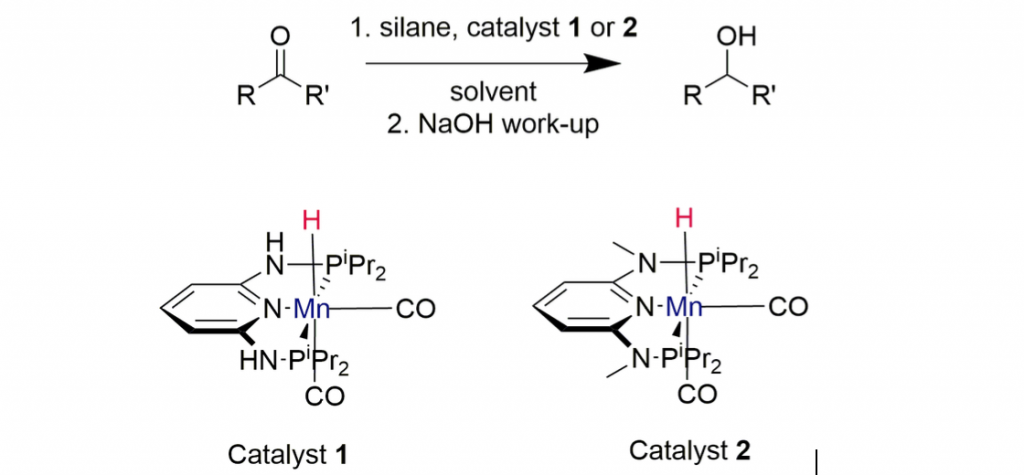
Figure 1. Reaction scheme of hydrosilylation
The role of silanes were investigated as possible hydrogen donors for the reduction of ketones and aldehydes. This procedure allows catalytic reduction in various solvent under mild reaction parameters, using well-defined PNP-Mn(I) hydride complexes. Apart from Phenylsilane as hydrogendonor, the inexpensive Polymethylhydrosilane (PMHS) can be used with catalyst loading below 2 mol% to achieve reduction of ketones and aldehydes.
References
(1) Gorgas, N.; Sto, B.; Veiros, L. F.; Pittenauer, E.; Allmaier, G.; Kirchner, K. Organometallics 2014, 33, 6905–6914.
(2) Garbe, M.; Junge, K.; Beller, M. European J. Org. Chem. 2017, 2017 (30), 4344–4362.