
Jesús Sanjosé-Orduna
Road to a full understanding of the C–H Activation using Cp*Co(III) metal complexes
Jesús Sanjosé-Orduna, Juan M. Sarria Toro, Mónica H. Pérez-Temprano*
Institut Català d’Investigació Química (ICIQ), The Barcelona Institute of Science and Technology, Av. Països Catalans 16 – 43007, Tarragona (Spain)
e-mail: jsanjose@iciq.es
Over the last decades, transition-metal-catalyzed C–H activation has emerged as a powerful tool for the construction of carbon–carbon bonds. Until recently, the majority of these transformations were achieved employing precious second- and third-row transition metals. However, the development of novel methodologies based on more cost-effective first-row transition metal complexes has emerged as a very attractive alternative.1
Among them, cobalt catalysis has shown its potential to construct C–C bonds via C–H activation using cobalt(III) catalysts.2 Despite this significant progress, these CoIII systems for C–H functionalization are still at their infancy and important, fundamental questions remain unsolved, specially concerning the lack of information on the mechanisms of these transformations and the involved active species.
This presentation will describe our recent efforts on unravelling mechanistic details of Cp*Co(III)-catalyzed C–H functionalization reactions by capturing and characterizing previously elusive transient reactive intermediates.3
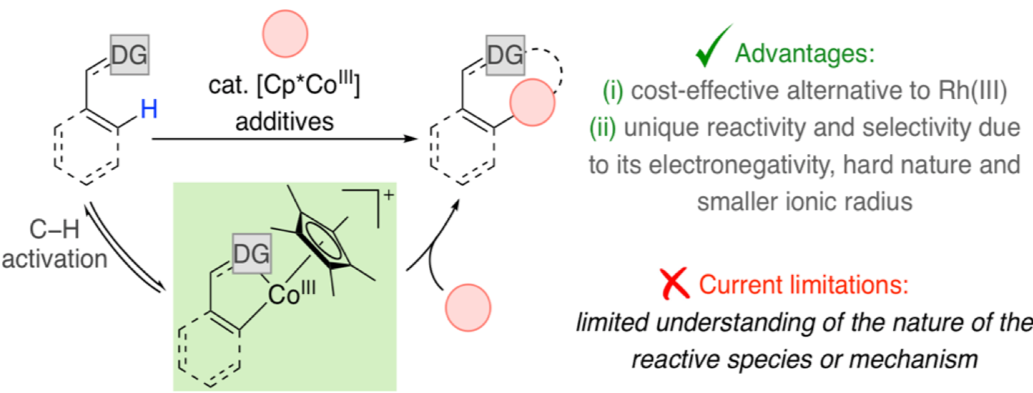
Figure 1. Cp*Co-catalyzed directed C–H functionalization.
References
- Su, B.; Cao, Z.-C.; Shi, Z.-J. Acc. Chem. Res. 2015, 48, 886.
- Moselage, M.; Li, J.; Ackermann, L. ACS. Catal. 2016, 6, 498−525; (b) Wang, S.; Chen, S.-Y.; Yu, X.-Q. Chem. Commun. 2017, 53, 3165. (c) Yoshino, T.; Matsunaga, S. Adv. Synth. Catal. 2017, 359, 1245. (d) Chirila, P. G.; Whiteoak, C. J. Dalton Trans. 2017, 46, 9721.
- Sanjosé-Orduna, J.; Gallego, D.; Garcia-Roca, A.; Martin, E.; Benet-Buchholz, J.; Pérez-Temprano, M. H. Angew. Chem Int. Ed. 2017, 56, 12137.